Download Transcript
Spencer Levy
In around 2014, one small Canadian city experienced the start of a deep office vacancy crisis. It was caused by a crash in the energy sector, its primary economic driver. Then came the pandemic and an even deeper slump in the office market. The city found a way out by focusing on conversions using a formula of private and public teamwork that led to roaring success. On this episode, we learn from this version of the Calgary Stampede.
Greg Guatto
I had never seen so much collaboration with not only the real estate community, but the real estate community with the city.
Spencer Levy
That's Greg Guatto, the CEO of Aspen Properties, a boutique firm that owns and manages approximately four and a half million square feet of assets, mostly office, in the downtown cores of Calgary and Edmonton.
Thom Mahler
We got it done because we had a crisis, and it's working because it's founded in what was important to the real estate sector to make these projects work.
Spencer Levy
And that's Thom Mahler on the public side, Director of Downtown Strategy with the City of Calgary, where he also serves as Deputy General Manager. We also have a leader from CBRE Canada who says his team has been fielding a recent swell of interest at what Calgary has been getting done in the conversion space – and how.
John Fisher
The occupiers that we're talking to are talking about this. It's a positive sentiment story and it's creating a good vibe for being in the city.
Spencer Levy
That's John Fisher, an Executive Vice President and Head of CBRE's Occupier Accounts Advisory Group. Coming up, a city of 1.6 million people in southern Alberta that's building a model for office conversions. I'm Spencer Levy, and that's right now on The Weekly Take.
Spencer Levy
Welcome to The Weekly Take, and I am delighted to be with our friends in Calgary, Canada. And why Calgary? Because they may be the North American, if not global, leader in conversions of office buildings into multifamily. So let me first welcome Greg Guatto, CEO of Aspen Properties, a prominent developer that's doing one of these conversions. Greg, thanks for coming on the show.
Greg Guatto
Happy to be here. I look forward to chatting about this. This is a big subject in our city.
Spencer Levy
And Thom Mahler, City of Calgary. Thom, thanks for coming out.
Thom Mahler
Thanks so much for having us, Spencer.
Spencer Levy
And then our own John Fisher. John, welcome to the show.
John Fisher
Great to be here, thanks Spencer.
Spencer Levy
Well, I travel globally and I certainly speak to every major city official and certainly major developers but Calgary has gotten great press and it's been for a while now. It's not just recently. My friends at Gensler, which is one of the largest architectural firms in the world use Calgary as their example of this is how you get it done. So in very basic terms, Thom, since you are one of the city leaders, why is Calgary getting it done in office conversions?
Thom Mahler
Well, my favorite line is we're getting it done because it was the real estate sector that developed the program and then it was vetted in terms of impact by the city on our assessment property tax base. So our strength is that the program that we developed as a city was founded in real estate development principles right from financing to construction, implementation timelines. And really what the city's role was, was to say, if these things happen, if these projects get going, what's the impact on our property tax base? And what does that mean for the rest of the municipality? Because our issue as a city, our crisis was our downtown core lost $17 billion of property value, which was a massive hit to our property tax revenues as a city. And so to provide the same level of service, we had to collect money from non-residential properties across our municipalities, which really hurt industrial properties. It hurt small commercial building owners. And it affected our competitiveness as a city. We were losing business. It was difficult for us to compete even with our more rural neighbors around our borders, let alone other cities across North America. So we got it done because we had a crisis and it's working because it's founded in what was important to the real estate sector to make these projects work.
Spencer Levy
Well, in the words of Rahm Emanuel when he was Barack Obama's chief of staff, he said that a crisis is a terrible thing to waste. And then you looked at this through the lens of a real estate developer. And since we've got a prominent real estate developer right here, Greg Guatto, how are you getting it done in the project that you're working on to convert an office building to multifamily?
Greg Guatto
Let me start with Thom, just an exceptional job of reaching out to our community to say, we got a problem. We got this chronic vacancy. How do we fix it? How do we get vibrancy in the downtown? What do we do? And, you know, I've been doing commercial real estate in the city of Calgary for 35 years. I've never seen collaboration amongst my colleagues in the commercial real-estate business, particularly downtown. And working with the city to try and find a solution. So certainly hats off to Thom and his group and the city of Calgary for being–not looking at developers like, oh, there's the evil developer who's just gonna try and take advantage of this situation, but how about give us your ideas what can make it work. That's an incredibly important part to why we've had success, I think, in our city. But to your question on our project and are we getting it done and what are we doing? So it's a large project. It's the largest conversion that we know of. It's 424 units in a 400,000 square foot office building. It's a 1968 office building that we've owned for over a decade and we were looking at it seeing that it's half vacant. The market's tough. Tenants aren't interested in B and C class. They want well-amenitized, well located, A-plus kind of assets these days. It's gonna be a long, long time before we're gonna have an office tenant come here. So we engaged our architects – GGA and EllisDon, who's our construction partner – and we went through a full exercise on, is this plate gonna work? Is this all gonna happen? And here we are fast forward. We got it financed, which was tricky in and of itself, just given it the scale and size of it and worked with the city through their incentive program to finally kick it off. And we're about halfway through construction now and it's working out. And I can talk about some of key things that are making that work, if you're interested, Spencer.
Spencer Levy
I will in just a moment, Greg, but before we get to the nitty gritty, I'm going to ask John his perspective of how he's seeing the transformation of Calgary.
John Fisher
Well, the sentiment is reality. And of course, in 2014, we had a very depressed oil price and Calgary is an energy city. So that created a lot of issues with respect to vacancy. And I think a lot of folks look at office vacancy in a pandemic context but we've been at this well before the pandemic ever happened. So the brokerage community largely was fighting an uphill battle. We were looking for opportunities to create market conditions that would help both the landlords and the tenants come to sort of satisfactory transactions. And what was happening at the time and has now sort of taken root in the rest of the cities in North America is, as Greg mentioned, these older properties, B and C class properties, just simply do not have an economic base to make a transaction make any sort of sense. So the flight to quality is great. I mean, we're certainly putting tenants in quality buildings, but what do you do with these B and C properties and how it relates to overall health and vibrancy of downtowns is when you have vacancy for sustained periods in buildings, you start getting the wrong kind of perception about those corners, those streets, and it creates a negative perception of those areas of downtown. And that makes it very challenging, especially for corporate occupiers who are in large spaces that are already in those areas. They're saying, how do we get out of here? So I think largely the conversion program was looked at as an opportunity from our perspective – not only as an opportunity to change the tax equation, but simply to just create safer and more vibrant streets by getting more bodies in these more empty buildings, getting people living there in an 18 hour site and getting more street traffic. And I think largely that's been the case. Thom.
Spencer Levy
I studied the Calgary program and I understand it's something like a four to one ratio in terms of how much capital is being provided to a public-private – the private provides four the public provides one, about 15 million dollars per building. Walk us through the specifics of the program.
Thom Mahler
Sure. So the way the program is structured, it's actually evolved a little bit. We did some tweaks to the program just this past May, but it's basically founded in a universal rate of $75 per square foot is what the city will pay for the removal of office. So the key principle is that you have to have a building. It has to be assessed as office and we will give you 75 bucks for every square foot you turn into a use other than office. And primarily that's been residential. I will note we also have a separate program that was designed around post-secondary institutions and we have one of those as well. And then we've also had a hotel that is completed and we're getting interest in hotels. So the original program had less of a rate for hotel. It was at $65 per square foot. Council loved the return on investment of the one hotel that we had. It pays back a lot faster for the municipality. So they said, go back and take a look at the rates and maybe we could do something to incent more hotels. So we've now increased the hotel conversion rate to $75 per square foot as well. And that's how the program works. I think one of the things – our success for the program is that we don't, we haven't loaded our program. It's not a beauty contest of which looks best. It's really which is the most–if you got office, which is most financially viable and likely to proceed, those are the ones we pick. One of the biggest secrets is that we haven't added on requirements for affordability. We haven't added on the requirements for green building performance or performing arts spaces or public art. A lot of the things that we would do on a new build project and that has been one of the secrets. And then the other piece I really wanted to mention is even before this program we created something called our Center City Enterprise Area where we removed any permit, discretionary approvals required to convert a building from one use to another. And the idea was it was small. It would be for, like, a restaurant turning into a bank or on a change of use. There was no requirements to comply with parking or other city levies are not required. And then this conversion program, when it came in, we now do entire conversions of buildings. I think Greg might've had a bit of a development permit, but it's very light touch. There's no discretionary design review, there's no opportunity to appeal these projects. Basically, it becomes an exercise in how do we build this thing? And then we have a concierge service within my group that works with applicants from day one, right to occupancy with our building department to deal with problems as they come up. So it's very much a team effort that we've been using.
Spencer Levy
I just took a look at the rents for Calgary, and you're getting rents that are under $2,000. So Greg, walk me through the math. You're getting 75 bucks a foot from the city. How do you make it work?
Greg Guatto
You've got to start with what's the building cost? You know, what's a vacant building worth? What are you going to attribute in value to that vacant office building? And the answer is somewhere around the incentive number. The answer is somewhere around $75 a square foot. So you can go and buy a mostly empty, B-class, west end office building today for $75 to $100 a square. That's your basis. And you think about the city incentive program. Which by the way–that money comes in at the very end of the project, that gets you back to zero. So now it's really about your construction costs and how do you make it work. And the math that Gensler would tell you and our architect would tell is that you've gotta have efficiency of at least 80% on your floor plate.
Spencer Levy
Greg. I just want our listeners to understand what that means. What it means is that you're using, you're renting 80% of the square footage in the building. The loss factor, which is the 20%, includes common areas. It includes elevators. It includes equipment. And so 80% is a very high percentage, relatively speaking, but those percentages are typically higher in multis than they are in office. But, nevertheless, 80% is the magic number for you, Greg?
Greg Guatto
It is, yeah. And, you know, take a 100,000 square foot office building, for example, you gotta get 80,000 feet of space you can get rent off of. And that means that an incentive of $75 per square foot of office goes a little bit further. But that math has to work. If you're gonna build a brand new residential tower, that number's in the 90s. You're looking at 90% efficiency because it was designed to be an office tower. So the pro forma rents, when you back it into, okay, you got a building for free, you get about 80% efficiency. We look at our cost to construct and our cost to finance it, the rents for break-even for us were a little over $3 a square foot. And we've got one and two bedroom units and we pro forma $3.20 by the time we were open.
Spencer Levy
And that's a monthly number, correct?
Greg Guatto
That's a monthly number, that's right, per square foot on the rentable area. And that gets you a pretty skinny return if with a lot of risk, and had that incentive not been in place, there's no way we would be doing this job.
Spencer Levy
If I'm mathing this right, $3.20 is the equivalent of about $40 a foot annually. And if it's about $20 a foot, let's assume you got the building for nothing once you factor in the $75 a foot. What are your construction costs, ballpark?
Greg Guatto
We quote it on a per door basis and we're close to 300,000 per door.
Spencer Levy
Okay.
Greg Guatto
And on new build, you'd be a lot more than that because you do get to take advantage of many things that are in place, like elevators and parkades and curtain walls and roofs, but that's the rough math.
Spencer Levy
Let's go to John for just a second here. You represent big occupiers. Walk me through the case of Calgary or Edmonton or one versus the other or other places in Canada. Why are you selling these places to large occupiers?
John Fishe
I think for corporate occupiers, especially in a post-pandemic era, having people feel welcome, feel safe, and feel energized to go to the office is a very, very high on the hit list of all of our corporate occupiers. And part of that is those vibrant streetscapes having a densified core. And particularly in the Calgary context, I mean, we've had 20% population growth in the last five years. Like it's an incredible population growth story. So being able to house these individuals–I mean, this is rapid housing in a way. We're building these things faster than you could ever build, net new, in areas that actually service where the corporate occupiers are. So you can actually create the live, work, play vibe that all of the occupiers want for their employees by having quick access to livability within a block or two blocks within the same neighborhood. And I think in a post-pandemic context, the amenity of being able to be close to the office and having these vibrant streetscapes is as important as the actual office itself. So certainly that's the case in Calgary. I mean, obviously – we're sitting in Calgary; we do business all over North America and the globe, frankly – 40% of all the conversions in the nation here are done in Calgary. It's just been, like I said earlier, the bellwether of this project. This concept of can we make this work has happened here. It's been an incredibly successful project and it's something that – even the occupiers that we're talking to are talking about this. It's a positive sentiment story and it's creating a good vibe for being in the city.
Spencer Levy
Since you see the entire landscape of the city of Calgary, how do you factor in infrastructure, walkability, other factors, and then layer on top of it, we want to convert some of these buildings?
Thom Mahler
Well, it's a great question because when we were working with the real estate folks on this program, I think one of the lingering concerns at the time was we actually weren't growing very much. And if we go back to 2021, the population growth hadn't happened yet. And the biggest concern was who wants to even move to Calgary? There weren't a ton of new jobs being created. So the related strategy that we had was well, we can't just make it easy to develop the housing. You need to make a downtown that somebody will want to live in. And our downtown was very much an office commuter core. It was highly amenitized for office workers, and it worked like a hot damn. We have a pedestrian mall downtown called Stephen Avenue Mall, a historic street. It's a beautiful street. And it worked really well for office lunches, but it didn't do anything on the evenings and weekends. So the other part of our strategy has been we've had a capital program to reinvest in streetscapes, parks, public spaces, which we do in conjunction with, where possible, these conversion properties as well. So one of the streets that we're rebuilding, we're adding in trees on sidewalk cycle paths, as well as wider sidewalks to make the ground floor of the streetscape more conducive to converting to a mixed-use residential environment as opposed to just a way to get in and out of downtown. And so that relationship between the public amenity with the private real estate is kind of how we continue to reevaluate where we spend our money.
Spencer Levy
Thom, how much are grocery stores playing into your strategy?
Thom Mahler
Our population over the last 20 years in our downtown has been growing, so we did have food stores. But the biggest concern is in the west end of downtown where a lot of these office buildings were, we did not have a food store. So our strategy has been not so much to attract those things. But like I said earlier, Spencer, was we try not to have any regulation between a business wanting to locate and getting to open space. So we actually did have no frills, which is a–what would you call it? It's not a high-end grocer, but they provide value food services in a neighborhood, which is very mixed income. And they were able to move in very quickly into a purpose-built rental that had been built previously. But if it were not for the momentum of the conversions that we had, I don't know that that food store would have made the decision to locate in that space. So we are seeing momentum and John can probably speak to it better than I can. We're starting to see in that west end of downtown, a different type of tenant looking to locate there than we would have seen five years ago.
John Fisher
I also think it's important to talk about what I would call sort of a shadow of monetization of major infrastructure projects. We spent more than $2 billion basically in this small few block radius between a public library, a new NHL level event center, a tech incubator called Platform Calgary, the Glenbow Museum, our downtown museum, has been completely revitalized, and we're working on one of the largest arts center renovations and expansions in the country. All of these things are happening in the downtown context, and I think you add that to the conversion projects that are happening, the streetscape improving, people getting back into the office, and all these major fantastic infrastructure projects in the city the size of Calgary, and it has a very good vibe. People are feeling very positive about being here. And that's why you're seeing some pretty amazing things. I mean, in the last four years, no city in North America has grown at a faster rate of tech workers, according to our Scoring Tech Talent. And now Calgary, which wasn't even on the map five years ago is now ranked 15th in North America for tech talent because the right type of people wanna move here and be part of the story.
Spencer Levy
Well, I would just note, because that's my favorite report written by my very close friend Colin Yasukochi, there must be ten Canadian cities on there. Canada, it does a great job of bringing tech talent in, not just growing it through its great universities but also from immigration and other other reasons. And so one of the things I want to touch on here for a moment Greg – and Greg I'm gonna I'm going to fill you in on a little secret here, since you have 30 plus buildings, I forget the exact number you said, but your significant office holdings in both Calgary, Edmonton, perhaps beyond that. I have found that in my vast experience that the highest and best use for an office building is an office building. Even though we're sitting here talking about the conversion story and it can work, we all know how hard it is. And Calgary, amen, has done a fantastic job. But you got to keep a lot of this office as office. Tell us what you're doing on that front, Greg.
Greg Guatto
Keeping the office as office. So the repurposing and revitalization of offices is going hand in hand with the downtown conversion project. So we're spending a lot of time trying to make our city cool, and in our own offices, so that companies are able to attract the talent that they want and that they need to wanna be in the downtown and working together. We use a quote saying that the apple might rot from the inside out. You better have a good downtown to have a strong city to attract people. And it's worked and that's been a big part of it. So we're doing what we can on the office side. We're putting things like dog-friendly buildings. We've got a sport court in the middle of a lobby in one of our towers. We've got non-for-profit coffee shops. We've gome very cool amenities. Golf sims all over the place. And it's working for that young talent and those companies that want to attract and retain young talent and have them be in their downtown.
Spencer Levy
This is the one that surprised me, particularly in colder weather environments and I'm not knocking cold weather in Canada. It's cold in Maine and New York. And what about outdoor amenities?
Thom Mahler
Well, I'm glad you mentioned that, Spencer, because it's not just the infrastructure, like putting in the park or putting in a plaza, it's actually the funding to do the programming. M y team has been heavily involved in–we don't do all of the programming ourselves, but we remove barriers for somebody who wants to run an event. We also subsidize some startup events in order to get things happening. We actually took a parking lot in the west end of downtown and we call it River Hall. We've worked with a private consulting firm based out of Montreal, who are really good at this to create–it's really an outdoor recreation center. Everything is free except for the food. And there's a licensed beverage provider there as well. And it just has this amazing vibe. Anybody can go there. It's free yoga classes. They do music contests. They do dance contests, but it's actually drawn people out of people who bought condos or who've lived in that neighborhood for years. They now have a place to go that's their own. Because downtowns are notorious for having lousy community infrastructure. And so what's the synergy that we see now between commercial real estate and what we're trying to do as a city is it's the same things. The same things John and Greg have talked about: how do I attract a tenant? It's the same things that residents want. They just want cool, safe streets and they want some affordability as well to be able to to have a great life without having to be rich.
John Fisher
I was going to say on a property level too, I mean, Greg, you can speak to this, but the very conversion project he was talking about at the start of the program, this large project, at the base of it for years, they had a three-on-three ice hockey rink that they made outdoors, which was a really–I don't think I've ever seen that before. It was a pretty cool amenity.
Spencer Levy
And talking about outdoor acts, I looked up all the great Canadian acts, starting from Rush with Geddy Lee and Neil Young, Celine Dion, Bryan Adams. I mean, come on, Thom, why don't you get some of these folks to play in Calgary?
Thom Mahler
Well, that's actually one of the things that we do. We actually have–the National Music Center of Canada is based in downtown Calgary. And we bring in regularly–we actually just recently had Deep Purple was in town because the Rolling Stone mobile audio truck is in the National Music Center. So a lot of artists that did recordings on that truck have been coming back in town to reconnect with it. So we're very–like, you just kind of make light of it, but it actually is a very specific strategy that we have. How do you leverage things like music, entertainment, and make downtown the place where people wanna go? That's where the event center comes in. You know, we have to try and make a space for our own Tate McRae, because she's outgrown our city.
Greg Guatto
The other thing is you've heard of the Calgary Stampede and the 10-day festival that happens in the middle of the summer and it's a rodeo and so on. And it's historical. It's over a hundred years old. It's an amazing week. The place is packed. A million visitors come to our town. Well, now I think there's something like 11 music events and tents and venues that are constantly playing concerts all the way up from Kiss, you know, big names down to the small local artists. And it outdoors, inside. And it's turned more into a music festival, it feels like almost. Then of course all the Stampede's going on, which is super exciting, but it's a big part of it.
Spencer Levy
At the arena here in Baltimore, where I live, they used to have an indoor soccer team there. And they ended up getting rid of the soccer team. Why? Not because they didn't want to have a professional sports team, but because by getting rid of the professional sports teams, they increased the number of concerts they had from something like 10 to 15 a year to like 70 or 80. And it's very often a counterintuitive thing. I think this speaks to multifamily conversion. Sometimes it seems counterintuitive, but it opens up other uses if you think creatively because look I've been looking for the secret sauce just like every other real estate person has on these conversion things. And I think the secret sauce isn't money. It isn't infrastructure. It is the creativity to be able to think bigger. Agree or disagree Thom?
Thom Mahler
I totally agree. So we're doing all things on that front to create this environment that people want to live in and that people want work in. It's the same person, but you have to create an environment that makes it easy for the creative person, a creative entrepreneur to take their idea from a coffee shop over a laptop to operating a business in a vacant storefront, if that's what it takes. So removing barriers and not just removing the It's actually like working with them from project conception to occupancy all the way. And I think that's been our secret. You just create an investment. You want people to want to invest in your community. And if they feel confident, they feel that your city hall is a partner and not a barrier, that's that's one of our strategies within our downtown for sure.
John Fisher
The only thing I would add, and I think that it was maybe implied, but the secret sauce in my mind why it worked really well in Calgary is because, as Thom mentioned at the outset, you had the developers and landowners initiating the conversation rather than the city. And they came to the conclusion that it is viable under a certain set of circumstances. Then they approached the city with this concept, but it was fully baked out in a very collaborative format. And it was supported by various members and service providers. So it was supported by brokers saying, yes, this makes sense. The vacancy is a problem. It will not solve itself on its own. It was supported by architects and designers and urban planners who were all talking the same language. So the collective that got together to make the recommendation, not as a one-off, but as a living thing. I mean, Greg, Thom and I have been working on this–I think 2017, ‘18 is when we started, and in the first shovel wasn't in the ground for years later. But that long-term, long-view approach with every stakeholder engaged and singing from the same song sheet has been, in my mind, why it's been so successful. And if there's a piece of advice for other cities trying to tackle this problem, it's you have to engage all of the folks that are involved in this thing. You have to engage the developers and owners and get them together and get them solving that problem.
Spencer Levy
The follow up question that I would have here is, why? Why was Calgary able to do this? In many other cities, there's a conflict between the business community and the public community. There's a conflict between the different stakeholders. In your opinion, why did Calgary come together? Thom?
Thom Mahler
There was the crisis issue that we had that I think gave our council the trust that we got to do something – and they needed to do something fast. One thing we didn't talk about was political courage. I think one of the things that Calgary had at the time was a lot of courage on the part of our elected officials to do this. A lot of cities I talked to, they're like you give the developers how much? Like it's not an insignificant amount of money. So to have a city council and a mayor back here, and we had–we're on our third mayor who has had involvement in this that understands the problem and is willing to listen. But every city has to figure out how much that is, how much can they afford. Calgary is also blessed. We had pretty strong financial reserves as a municipality. We've done well, we've budgeted well, but some cities don't have that luxury either. So it comes back to, you just need to build a trust relationship with your local development industry because it's gonna be the local developers that save you. It's not gonna be somebody coming riding in on a white horse from another jurisdiction to save your downtown. It's built from the ground up. We have some of the best real estate people I think in North America, right in our community. So we just listen to you.
Greg Guatto
I'd also add on to that, saying that we all looked at the vacancy and said this isn't going away. Let's get the property tax consultants. And it was crisis mode. Let's get the property task consultants coming in telling us all this loss of property tax that has come from the downtown and pushed on to the residents of this city – because this is zero-sum game; it's got to come from somewhere – isn't coming back for a decade at least, given the gravity of the vacancy situation and the image of our city is falling quickly. So it was crisis mode and you led off the show, Spencer, talking about, you know, every crisis is an opportunity. And again, I've never seen so much collaboration with not only the real estate community, but the real state community with the city to try and find a solution together.
Spencer Levy
You know, we're having this show for a very important reason. You are the example of what can be done. Certainly in North America, probably beyond. And I've been hearing about this story for years and I'm just proud to have this episode because of all the great work you've done. But I would love to see what the future looks like. So perhaps we'll start with you, Greg, as a real estate developer. How do you see the next couple of years? I'm going to ask the same question for everybody.
Greg Guatto
We're bullish on our city and on our province. And in fact, we’re just waiting conditions today on another office acquisition that we're really excited about. So we're putting our money where our mouth is. That's for sure. We like the economic prospects. Alberta has a real can-do attitude. And you can see our city fixing itself. On a local basis using a made-in-Calgary solution. I mean, that's happened to our business community as well. We're entrepreneurial and we've gone through so many cycles and we'd been hit by low oil prices and we're certainly a more diversified economy that's attracting young talent, particularly from other places in Canada right now. They're looking at Calgary saying, that’s a cool city. That's a place I might be able to afford a home one day. There's lots of jobs there. I can go to the mountains on the weekends. Wow, that's pretty exciting. So that's the image of our city, the brand of our city. All those things are lending to us being very bullish on our city as investors
Spencer Levy
Thom, how do you see the next couple of years?
Thom Mahler
We're very excited as well with the momentum that we have in all the sectors, especially the multifamily sector is still strong in spite of some slower population growth. But the other growth that we're seeing is in our tourism convention business. And we've had record numbers of tourists the last few years. Our provincial government is a big supporter of enhancing the tourism environment. We're close to the mountains we're talking about. Connecting our airport to the downtown with rail, and then from our downtown out to the mountains with rail. There's just so many things that are happening that if I'm an investor, I would wanna listen to what's going on in Calgary. Like our mayor likes to say that we're gonna be 2 million very soon. We basically are at 2 million within the region. And I like to say, I'm imagining Calgary is a city of 4 million. What do we have to have to be a really great city of 4 million? Because we made the mistake of under investing in our city because we didn't think we were gonna grow the way we did. So now we have to rebuild all our cultural investments, our performing arts centers, our museums, they were all too small. So now let's make sure we right size it this way. So yeah, we're very excited and people, our community as a whole is very aligned and we've worked very well together.
Spencer Levy
John, we’ll give you the last word. How do you see the next couple of years for Calgary?
John Fisher
I think it's very optimistic. Capital has returned in every asset class in business as well as in real estate. And I think full stop when capital returns following the sentiment of the most important amenity for any city, which is people. This is a people-centric plan. It's a people centric plan. And when you build those, everything you're doing around that, you're just going to have success, long run. And I do hear it on the streets. I hear it from my occupiers. I hear from my competitors. People are really taking a hard look at moving here. And I think it's only going to continue to increase, with the population growth, being able to rapidly house in a variety of different settings, these people, I think it’s going to be a fantastic opportunity for us. I think the city is going continue to grow and we’re very excited.
Spencer Levy
Well, congratulations to Calgary on your success post-pandemic and being the leader in conversions, but based on this conversation, so much more. And on behalf of The Weekly Take, Greg Guatto, CEO of Aspen Properties. Greg, thanks so much for coming out today.
Greg Guatto
Thank you. Thanks for having me.
Spencer Levy
And Thom Mahler, Director, Downtown Strategy, and Deputy General Manager of Planning and Development Services, City of Calgary. Thom, thank you.
Thom Mahler
Thank you so much. It's been great, Spencer.
Spencer Levy
And then our own John Fisher, Executive Vice President, CBRE. Great job, John.
John Fisher
Thanks, Spencer .
Spencer Levy
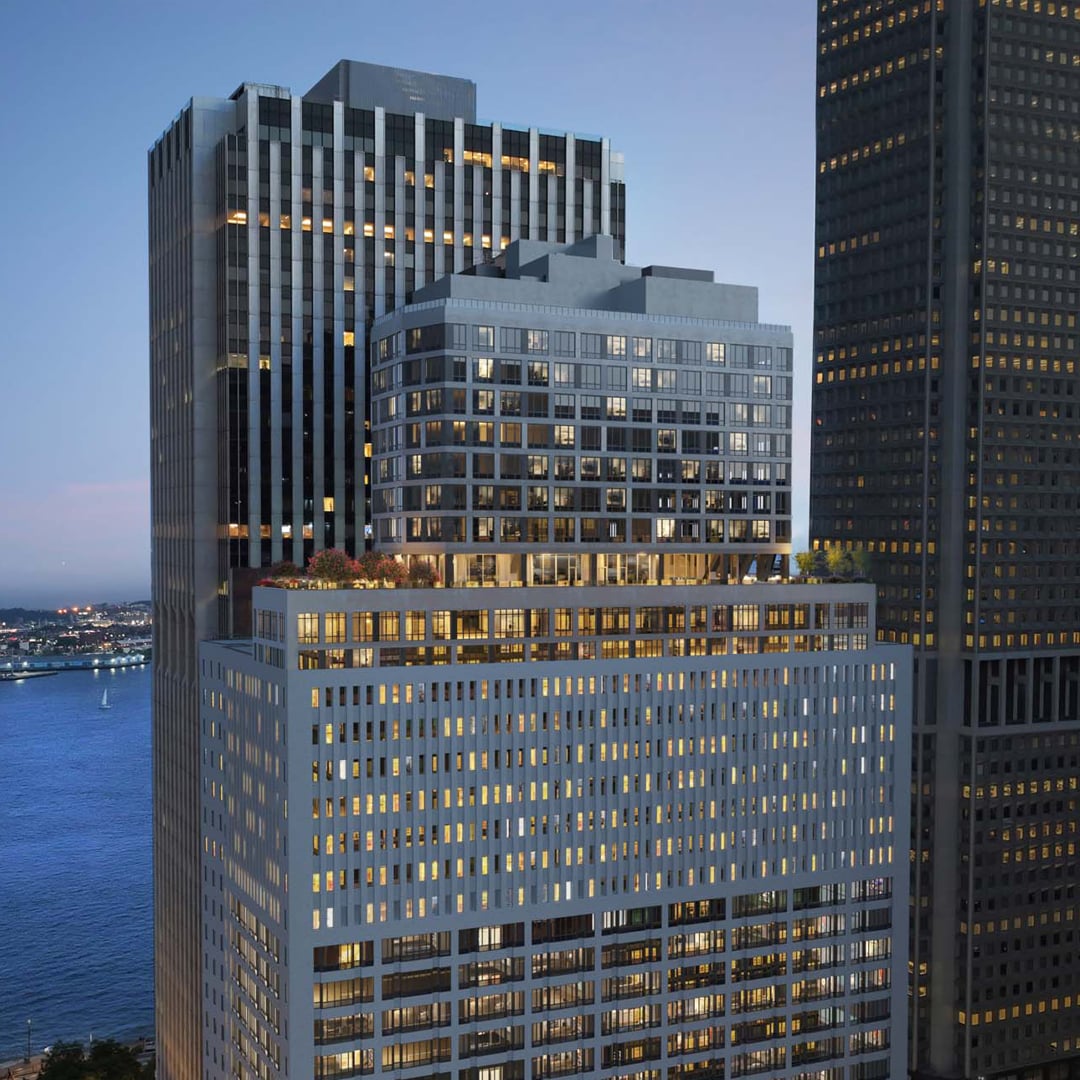
And thank you for tuning in. For a deep dive into some other conversion and development highlights, revisit the episodes we did on memorable projects such as 25 Water Street in New York City, or more recently The Spear in San Francisco. Those conversations are available on our website, cbre.com/TheWeeklyTake. Or on your favorite podcast platform from Apple to Spotify and YouTube and everything in between. We look forward to having you back again next week. I'm Spencer Levy. Be smart. Be safe. Be well.